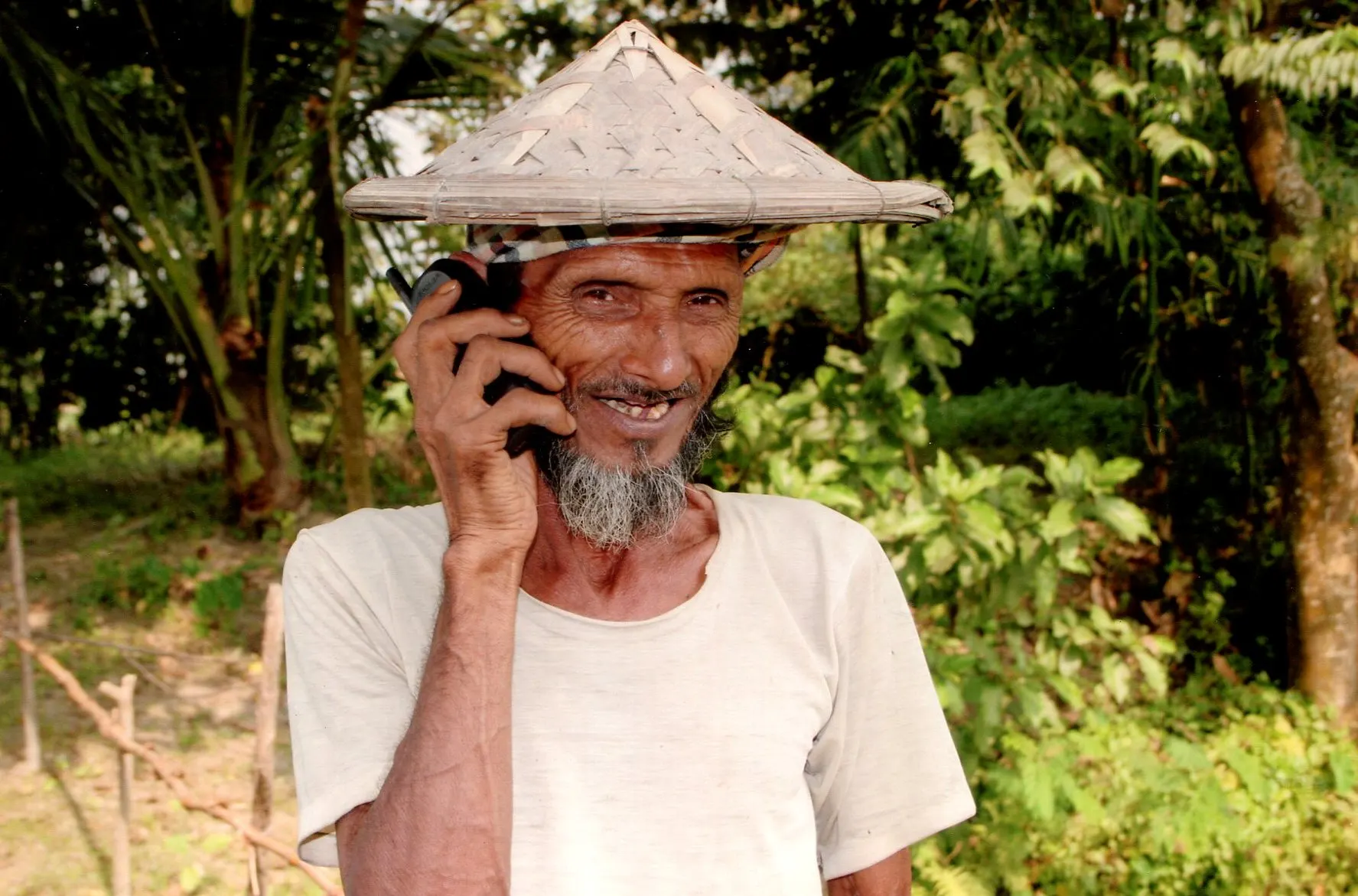
Investing in Connectivity, Transforming Communities
Overview
After Nobel Laureate Professor Muhammad Yunus established Grameen Bank to ensure institutionalized credit for the rural poor, he was looking for opportunities to create institutions that would address the development needs of the poor in effective and innovative ways.
Specially keen on taking advantage of modern technologies to increase the income of poor illiterate women and empower them both economically and socially. When the Bangladesh Government announced in the mid-1990’s that it would give telecommunications licenses to the private sector he felt that it could be an excellent opportunity to explore the potential of telecommunication technology in empowering the poor to boost their small businesses and increase their income. What was needed was an appropriate institution to fulfill the mission. The “Village Phone Program” of Grameen Telecom was the outcome of this foresight. In 1994 Bangladesh Telegraph & Telephone Board (BTTB), the government agency for telecommunications, invited international proposals from interested businesses to build cellular phone network in the country. Professor Yunus formulated an outline for creating a joint venture company in which a not-for-profit company with the name “Grameen” would easily attract international partners experienced in running telephone company to form this joint venture company. This joint venture company could easily spread the cell phone service in the country through the Grameen borrowers.
Specially keen on taking advantage of modern technologies to increase the income of poor illiterate women and empower them both economically and socially. When the Bangladesh Government announced in the mid-1990’s that it would give telecommunications licenses to the private sector he felt that it could be an excellent opportunity to explore the potential of telecommunication technology in empowering the poor to boost their small businesses and increase their income. What was needed was an appropriate institution to fulfill the mission. The “Village Phone Program” of Grameen Telecom was the outcome of this foresight. In 1994 Bangladesh Telegraph & Telephone Board (BTTB), the government agency for telecommunications, invited international proposals from interested businesses to build cellular phone network in the country. Professor Yunus formulated an outline for creating a joint venture company in which a not-for-profit company with the name “Grameen” would easily attract international partners experienced in running telephone company to form this joint venture company. This joint venture company could easily spread the cell phone service in the country through the Grameen borrowers.

Grameenphone
On 16 October 1995 Professor Yunus got a new company named as Grameen Telecom (GTC) registered as a Not-for-Profit Company, Limited by Guarantee, under Section 28 of the Companies Act, 1994. Soon after it was registered GTC started looking for an experienced foreign partner to get a license to operate as a network builder and operator.
The Norwegian company, called Telenor, was approached because of Professor Yunus's friendship with the chairman of the company. Telenor agreed to form a partnership with GTC to work in Bangladesh despite the fact that this would be their first venture outside of Europe. Grameen Telecom, established by Muhammad Yunus, holds a significant stake in Grameenphone Ltd., which had a major influence in providing GSM cellular services in rural Bangladesh. The aim was to enhance access to modern communication technologies, especially for poor rural women, by creating opportunities for income generation through self-employment. Grameen Telecom owns 34.2% of Grameenphone's shares, while Telenor, a major telecom service provider, holds 55.8%, and the rest is owned by general retail and institutional investors. Grameenphone, with over 82.58 million subscribers, is a joint venture between Telenor and Grameen Telecom. Both entities have launched innovative programs to extend telecommunications services to underserved rural areas, significantly impacting connectivity and community empowerment. Their efforts in this domain have garnered various awards and recognition, highlighting their contribution to improving access to communication in Bangladesh.
The Norwegian company, called Telenor, was approached because of Professor Yunus's friendship with the chairman of the company. Telenor agreed to form a partnership with GTC to work in Bangladesh despite the fact that this would be their first venture outside of Europe. Grameen Telecom, established by Muhammad Yunus, holds a significant stake in Grameenphone Ltd., which had a major influence in providing GSM cellular services in rural Bangladesh. The aim was to enhance access to modern communication technologies, especially for poor rural women, by creating opportunities for income generation through self-employment. Grameen Telecom owns 34.2% of Grameenphone's shares, while Telenor, a major telecom service provider, holds 55.8%, and the rest is owned by general retail and institutional investors. Grameenphone, with over 82.58 million subscribers, is a joint venture between Telenor and Grameen Telecom. Both entities have launched innovative programs to extend telecommunications services to underserved rural areas, significantly impacting connectivity and community empowerment. Their efforts in this domain have garnered various awards and recognition, highlighting their contribution to improving access to communication in Bangladesh.